FloorSmiths London is a London and South East-based flooring company positioning itself as a one-stop shop for affordable luxury flooring. The brand sits between budget flooring suppliers and exclusive trade-only showrooms — offering premium products and expert installation with a design studio experience that's approachable for homeowners, not just interior designers.
The tagline is: "Where craftsmanship meets everyday life."
A fully functional React single-page application has been delivered as the working prototype. This is not a static mockup — all interactions are live and operational. The prototype uses client-side state management with React hooks for cart, routing, modals, and filters.
| Page | Status | Key Features |
|---|---|---|
| Home | Complete | Hero, trust marquee, product browser, testimonials, CTA |
| Collections / Shop | Complete | 24 products, 9-category filter tabs, product detail modal |
| Visualiser — "See It In Your Home" | Working (indicative) | Upload a room photo and preview a floor in-situ — the site's signature hook. Temporary in-house build now, with a clear upgrade path (see Section 07) |
| Design Studio | Complete | Split-panel hero, 6-card studio experience grid, booking CTA |
| About | Complete | Company story, 4 statistics, services overview |
| Contact | Complete | Two-column form + company info, trade account callout |
| Shopping Bag | Complete | Slide-out drawer, quantity controls, £500 free delivery tracker |
| Global Navigation | Complete | Sticky header, blur backdrop, mobile hamburger menu |
Our assessment
The prototype is genuinely strong work. The design system is coherent, the brand positioning is clear, and the user experience is well-considered. The brief correctly identifies the gap in the London flooring market — between budget and intimidatingly exclusive — and the site feels like it occupies that space with confidence.
The product detail modals include full technical specifications (thickness, width, length, finish, construction, underfloor heating compatibility), which is exactly the kind of trust-building detail homeowners need to make purchasing decisions online. The Amtico approved retailer credential is prominently featured, which is commercially smart.
The prototype is production-quality in terms of design. What it lacks is the engineering infrastructure needed to go live — routing, backend, payments, real imagery. That's exactly what the production build phase addresses.
The design system is locked and well-executed. Seven design principles govern every component — warm neutrals over cool greys, serif for emotion, sans-serif for function, gold used only as punctuation (never as background fill), generous whitespace, no decorative elements, photography and typography doing all the work.
| Role | Font | Weight | Notes |
|---|---|---|---|
| Display headings (h1, h2) | Cormorant Garamond | 300–400 | Serif. Italic on key words for editorial rhythm |
| Body, UI, navigation | Outfit | 200–600 | Sans-serif, geometric, modern |
| Overlines / category labels | Outfit | 400 | 11px, letter-spacing 3px, uppercase, gold |
Outstanding: The current logo is CSS-styled text ("FloorSmiths" with italic gold "Smiths"). A proper SVG logo mark is needed before launch — plus favicon, social media assets, and an email header template.
All 24 products in the prototype are illustrative placeholders — names, prices, descriptions, and specifications are indicative. These must be replaced with real product data before launch. The structure and categories below reflect the intended catalogue shape.
Note: All product names, prices, descriptions and specifications are placeholder content created for the prototype. Real product data, real pricing, and real specifications must replace all of the above before launch.
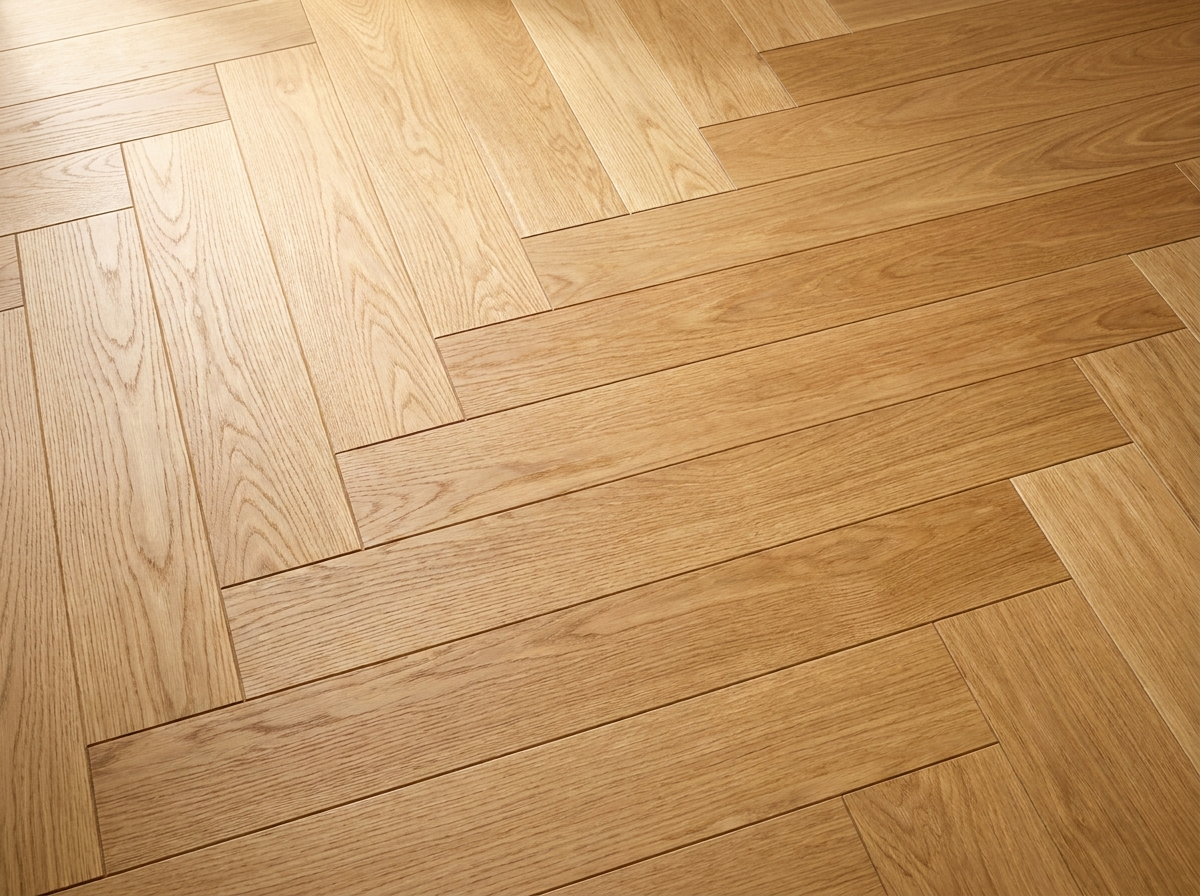
Currently all product images use Unsplash stock photos as development placeholders. These are legally fine for this stage but are generic interior shots — not actual flooring product photography. Replacing them is one of the most impactful things that can be done before launch.
A full set of 28 detailed AI image generation prompts has been prepared, covering all 24 products (close-up texture shot + lifestyle room shot each) plus 4 section/lifestyle images. Each prompt specifies exact grain type, finish appearance, edge profile, colour tone, pattern geometry, lighting, and camera angle.
| Image Type | Quantity | Purpose |
|---|---|---|
| Product close-up texture shots | 24 | Product cards, detail modals, e-commerce listings |
| Product lifestyle room shots | 24 | Product detail pages, collection headers |
| Hero / section lifestyle shots | 4–6 | Home hero, Design Studio, About, CTA backgrounds |
| Total | 52–54 |
| Approach | Cost (all 52 images) | Quality | Timeline |
|---|---|---|---|
| AI generated (DALL-E 3 / Midjourney) | ~£4–12 total | Excellent for placeholder; colour-accurate possible | 1–2 days |
| Professional photography shoot | £2,000–5,000+ | Best — real samples, controlled conditions | 4–8 weeks |
| Hybrid (AI now, real photography later) | ~£12 now | Launch-ready immediately, upgrade over time | 1–2 days |
Recommendation: Use AI generation now to make the site look real and get it live quickly. Professional photography is a later investment as the business grows. The prompts are already written — execution is fast and cheap.
The prototype is a React single-page application — excellent for demonstrating the design but not ready for production. It has no real routing (pages are managed via JavaScript state, not proper URLs), no backend, no payment processing, no form handling, no SEO infrastructure, and no image optimisation. The production build resolves all of this.
| Component | Recommendation | Reason |
|---|---|---|
| Framework | Next.js (App Router) | SSR/SSG for SEO, image optimisation built-in, API routes for forms |
| Hosting | Vercel | Native Next.js support, edge network, excellent UK delivery speed |
| CMS | Sanity or Shopify | Sanity if custom control preferred; Shopify if speed-to-market is priority |
| Payments | Stripe | Supports card, Apple Pay, Google Pay, Klarna/Clearpay for 0% finance |
| Forms | Resend + API route | Enquiries stay in-house, trigger email notifications |
| Images | Vercel Image Optimisation | Automatic WebP/AVIF conversion, responsive sizing, CDN delivery |
The visualiser is the prototype's standout interactive feature: a customer uploads a photo of their own room, picks a floor, and sees the transformation in seconds. For a flooring business this isn't a gimmick — it's the single most powerful conversion tool on the site, and it deserves to be treated as a headline asset rather than a nice-to-have.
Why it's such a strong hook
Flooring is a high-consideration purchase with one dominant objection: "will it actually look right in my room?" That single doubt is what stops people buying online and pushes them into showrooms instead. The visualiser answers it directly — it removes the risk before the customer has to commit, which is exactly what turns a browser into a buyer.
It's also a genuine differentiator. The competitors that intimidate homeowners with trade-only positioning offer nothing like it; the generic ones offer it badly. A confident, well-executed visualiser is exactly the "design-studio sophistication without the barrier to entry" that FloorSmiths is built to own.
The recommendation is to launch with the temporary version — it carries no recurring cost and starts proving demand immediately — then move to the subscription product once the analytics show the visualiser driving engagement and sample requests. Building the back end correctly now (next section) is what makes that upgrade painless.
Section 06 covers the build phases and tool choices; this section sets out the underlying data structure the back end needs and the recommendations for getting the best possible output from it. The principle is simple: a flooring site is only as good as the product data behind it. Floors are sold by the square metre, carry deep technical specs, and now have to feed a visualiser — so the structure has to be right from day one, with a single source of truth rather than hard-coded content.
We recommend a headless architecture — a Next.js front end (per Section 06) reading from a CMS/commerce back end — because it keeps the data clean and lets the visualiser, the AR upgrade and finance providers plug into the same product records without a re-platform.
| Entity | Key fields the structure must hold |
|---|---|
| Product | Name, slug, collection, material (engineered / solid / LVT / tile), finish, plank dimensions, thickness, wear layer, price per m² + per pack, pack coverage, stock status, underfloor-heating compatibility, fitting type, room-suitability tags |
| Media | Swatch image, room / lifestyle shots, a tileable texture per product for the visualiser, and a technical spec PDF |
| Collection | Category grouping (Herringbone, Chevron, Parquet, Versailles…), description, hero imagery, SEO metadata |
| Sample | Free-sample model — up to 5 products, delivery address, fulfilment status |
| Order | Line items with m² quantities, pricing, VAT, finance option, delivery, confirmation-email trigger |
| Trade account | Application, approval status, trade pricing tier |
| Enquiry / Booking | Contact and installation-booking submissions routed to a real inbox/CRM |
The one structural decision
Build headless with a clean product schema now, even while launching with the temporary visualiser and a starter catalogue. Every later upgrade — the Roomvo AR subscription, finance providers, a trade portal, more products — then becomes a plug-in against existing data rather than a rebuild. Getting this layer right is the difference between a site that scales and one that has to be remade in eighteen months.
The following decisions are required from Viv before the production build can begin. None of these are complex decisions — but they need to be made. We can work through them together in a short call.
Here is the recommended sequence once Viv has reviewed this document and is ready to proceed.
| Step | Action | Owner | Priority |
|---|---|---|---|
| 1 | Review this document, make notes on the 10 decisions | Viv | Immediate |
| 2 | Register domain(s) — blocks SEO start date | Viv / us | This week |
| 3 | AI image generation — run all 52 prompts | Us | This week |
| 4 | SVG logo design + brand asset pack | Us | This week |
| 5 | Decisions call — work through all 10 blockers | Viv + JR | Next week |
| 6 | Production build kick-off | Us | Following week |
| 7 | Real product data entry + CMS population | Viv + us | Alongside build |
| 8 | Soft launch + testing | Us | ~Week 6 |
The opportunity
The London flooring market has a clear gap at the "affordable luxury" level. The major competitors — Ted Todd, Luxury Flooring — either intimidate homeowners with trade positioning or feel generic. FloorSmiths London is positioned to own the middle ground: design studio sophistication without the barrier to entry.
The prototype is strong. The brand is clear. What's needed now is execution — imagery, real product data, and the production build that turns a prototype into a live business. All of that is achievable quickly and at reasonable cost.
"Where craftsmanship meets everyday life."